Feeling Parched? Understanding and Managing Dry Mouth
Sun, Jul 7, 2024
Read in 4 minutes
Ever feel like your mouth is a desert? Difficulty swallowing, a constant thirst, and a nagging feeling of dryness—these are all telltale signs of dry mouth, a condition affecting millions of people. But what exactly is dry mouth, and what can you do about it? This blog dives into the world of dry mouth, exploring its causes, consequences, and effective management strategies to keep your mouth feeling fresh and comfortable.
Understanding Dry Mouth: What’s Happening Inside?
Our mouths naturally produce saliva, a vital fluid that plays a multitude of roles.
Saliva helps with:
Breakdown and Digestion of Food: Saliva contains enzymes that begin the breakdown of food, making it easier to swallow and digest.
Washing Away Food Debris: Saliva acts as a natural rinse, flushing away food particles and bacteria that can contribute to tooth decay and bad breath.
Neutralizing Acids: Saliva helps neutralize acids produced by bacteria in your mouth, protecting your teeth from erosion.
Lubrication and Comfort: Saliva keeps your mouth moist and comfortable, allowing for smooth speech and swallowing.
When saliva production decreases or dries up completely, you experience dry mouth, also known as xerostomia This dryness can be temporary or chronic, depending on the underlying cause.
Causes of Dry Mouth: Unveiling the Culprits
Several factors can contribute to dry mouth. Here are some of the most common culprits:
Medications: Many medications, including antidepressants, antihistamines, decongestants, and blood pressure medications, can list dry mouth as a side effect. If you suspect your medication is causing dryness, talk to your doctor about alternative options.
Medical Conditions: Certain medical conditions, such as Sjogren’s syndrome, diabetes, and autoimmune diseases, can affect saliva production.
Age: Saliva production can naturally decrease as we age.
Dehydration: Not drinking enough fluids can lead to dry mouth. This can be particularly common during hot weather or strenuous activity.
Smoking and Tobacco Use: Smoking and chewing tobacco can irritate the mouth and decrease saliva production.
Alcohol Consumption: Alcohol has a dehydrating effect, which can contribute to dry mouth.
Head and Neck Radiation Therapy: This treatment for cancer can damage salivary glands, leading to dry mouth.
Consequences of Dry Mouth: More Than Just Feeling Thirsty
While the constant dryness can be uncomfortable, dry mouth can have several negative consequences for your oral health:
Increased Risk of Tooth Decay: Saliva helps wash away food particles and bacteria that can lead to cavities. Without adequate saliva, these bacteria thrive, increasing the risk of tooth decay.
Gum Disease: Dry mouth can contribute to gum inflammation and infection (gingivitis) and, if left untreated, can progress to gum disease (periodontitis).
Fungal Infections: The dry environment created by dry mouth can increase the risk of fungal infections in the mouth, such as thrush.
Difficulty Speaking and Swallowing: Dry mouth can make it difficult to speak clearly and swallow comfortably.
Bad Breath: Without the cleansing action of saliva, food particles and bacteria can linger in the mouth, leading to bad breath (halitosis).
Managing Dry Mouth: Keeping Your Mouth Moist and Healthy
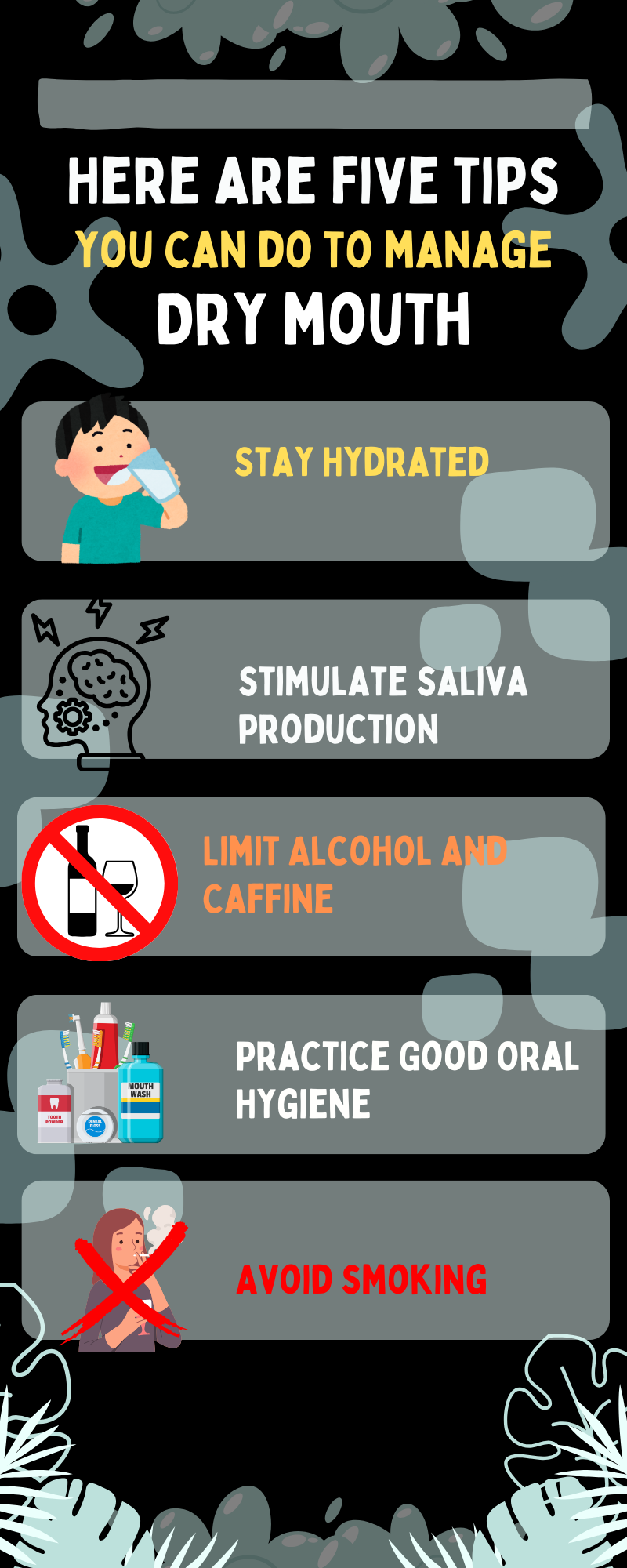
Fortunately, there are several strategies you can implement to manage dry mouth and keep your mouth feeling comfortable and healthy:
Stay Hydrated: Drinking plenty of water throughout the day is crucial for overall health and helps keep your mouth moist. Aim for eight glasses of water daily, and adjust based on your activity level and climate.
Stimulate Saliva Production: Sucking on sugar-free lozenges or chewing sugar-free gum (ideally xylitol-based) can help stimulate saliva production.Citrus food like Orange, lemon water stimulates saliva.
Use a Humidifier: Adding moisture to the air, especially at night, can help alleviate dry mouth symptoms.
Practice Good Oral Hygiene: Brushing your teeth twice a day and flossing daily are essential for removing plaque and bacteria that can contribute to bad breath and gum disease.
Consider Oral Lubricants: Your dentist or pharmacist may recommend oral lubricants like sprays or gels to help keep your mouth moist.
Review Your Medications: Talk to your doctor about any medications that might be causing dry mouth and see if alternative options are available.
Limit Alcohol and Caffeine: These substances can dehydrate you and worsen dry mouth symptoms.
Quit Smoking and Tobacco Use: Smoking and chewing tobacco can irritate the mouth and decrease saliva production. Quitting can significantly improve dry mouth and your overall health.
Seeking Professional Help: When to See Your Dentist
Dr Bikash Pattanaik,
Care and Cure Dental Implant and Cosmetic Center, Nashik
For more information please log in https://dentalcareandcure.in